Last Saturday marked an important milestone in the RurALL project’s eco-placemaking process in Dorog. What had started nearly a year ago as a series of community workshops has now taken tangible form at the Schmidt Sándor housing estate — through a hands-on community action day.
Rather than a one-off event, the intervention is the result of a carefully designed participatory process that combines local knowledge, professional facilitation, and sustained community engagement.
A process rooted in participation
The foundations of the project were laid in spring 2025, when the RurALL team, together with local partners, launched a series of workshops focusing on environmental challenges and community-based solutions in Dorog.
During these early sessions, participants identified key local issues and began formulating ideas to improve their surroundings. The second workshop then moved from ideas to concrete actions, helping participants define realistic steps and personal contributions.
After this initial phase, the process continued in March 2026 with a dedicated eco-placemaking planning workshop. Here, residents were invited to co-design the future intervention area — ensuring that the upcoming transformation would reflect real local needs and aspirations.
Turning ideas into reality
The community action day brought these earlier ideas to life.
With the involvement of more than 20 volunteers — including local residents, civil groups, and young participants — the site began to transform into a shared green space shaped by collective effort.
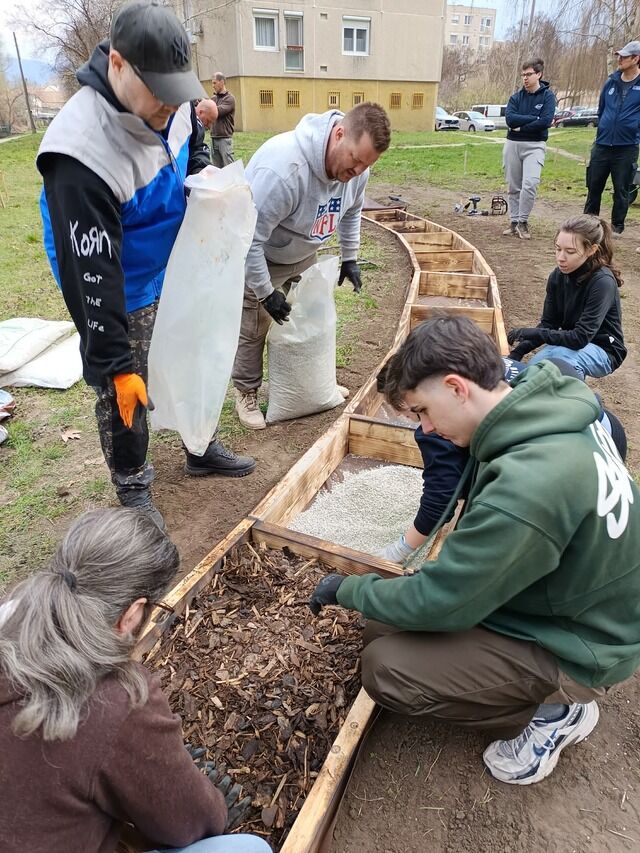
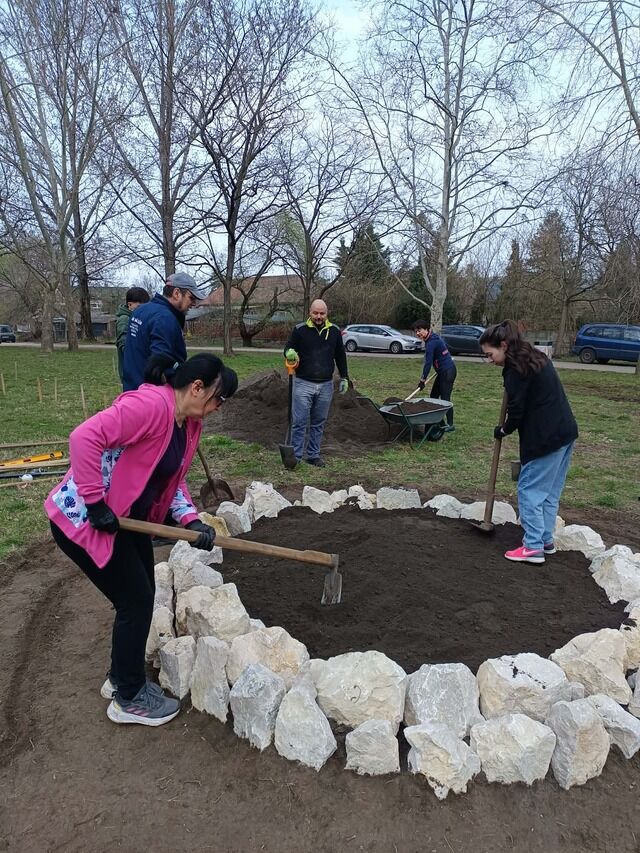
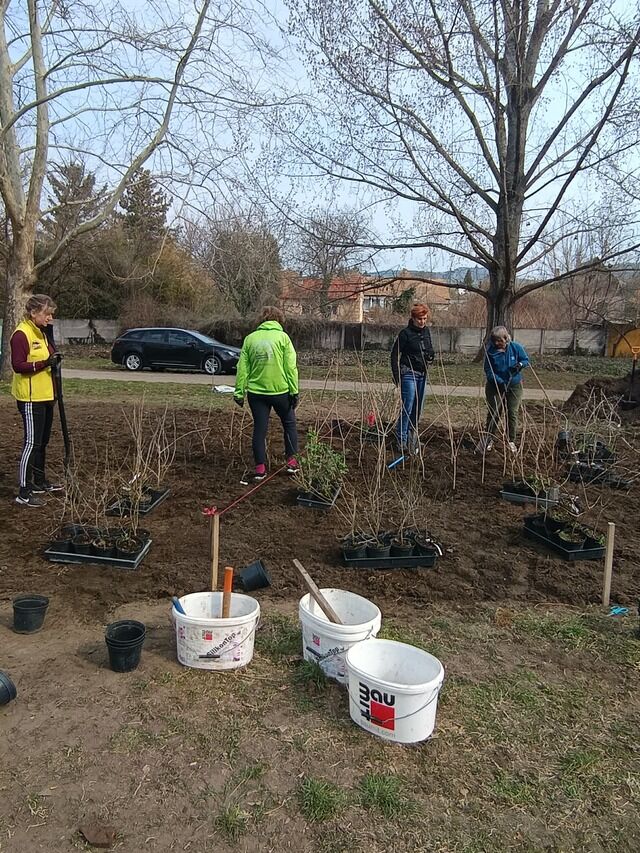
Participants worked in parallel on several elements of the site. A Miyawaki forest was planted, creating the foundation for a dense, fast-growing urban woodland. A herb spiral took shape from natural stone, while raised beds were constructed to support future planting and community gardening. The base layers of a barefoot path were also prepared, introducing a sensory and educational element to the space.
The implementation required not only enthusiasm but coordination and practical skills — from preparing wooden structures to soil layering and planting. The result is a space that already reflects both ecological thinking and community care.
More than a green space
What makes this intervention particularly meaningful is not only what has been built, but how it was created.
The eco-placemaking process strengthened relationships among local actors, engaged new participants, and fostered a shared sense of ownership of the site. The involvement of local organisations — including the KÖR-TE initiative and the Benedek Endre Barlangkutató és Természetvédelmi Egyesület (BEBTE) — was key to mobilising the community.
The project also demonstrates how small-scale, community-driven interventions can contribute to broader environmental awareness and long-term behavioural change.
Continuing the process
The work does not stop here. The next community action day will focus on further developing the site — including planting, shaping the paths, and establishing additional elements such as a rain garden.
As the RurALL project shows, eco-placemaking is not just about designing spaces, but about building processes that enable communities to actively shape their environment — step by step, together.


